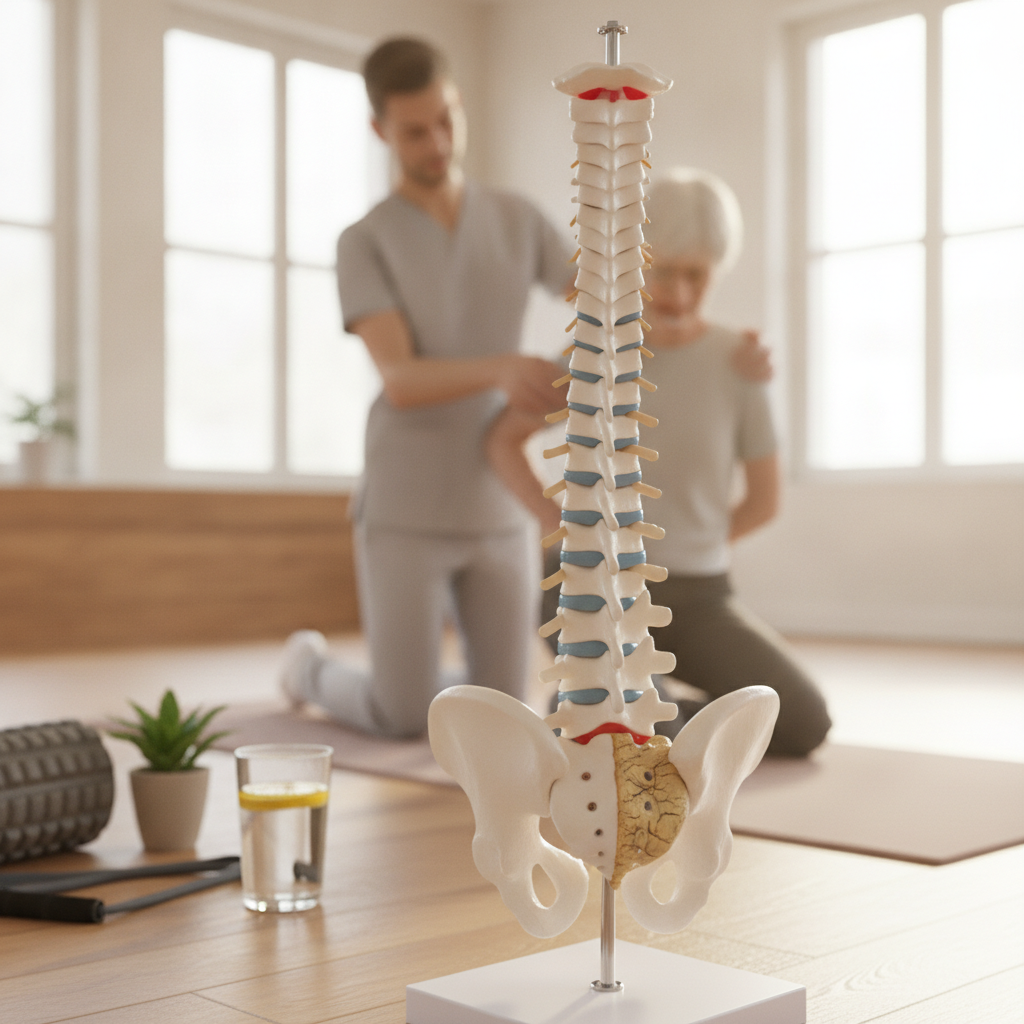
Spinal discs are shock absorbers composed of a tough outer layer and gel-filled center. With age, discs naturally dehydrate and lose elasticity. This process, called degenerative disc disease, is a normal part of aging but its pace and severity vary tremendously.
The Degeneration Process
Beginning in the 20s, discs gradually lose water content. By age 60, most people show some disc degeneration on imaging. However, imaging findings correlate poorly with pain—many people with severe disc degeneration experience no symptoms, while others with minimal changes experience significant pain.
Mechanical Stress Accelerates Degeneration
Repetitive stress, poor posture, and heavy loading accelerate the process. However, appropriate stress and movement slow degeneration by maintaining nutrient exchange within the disc. The disc is avascular—it receives nutrients through diffusion, a process enhanced by movement.
Exercise as Prevention
Paradoxically, appropriate exercise slows disc degeneration while immobility accelerates it. Resistance training and controlled movements maintain disc nutrition and the stability of surrounding muscles. Swimming and walking are particularly disc-friendly because water and forward motion distribute loads evenly.
Nutritional Support
Collagen comprises the disc's structural matrix. Adequate protein intake and vitamin C support collagen synthesis. Some research suggests glucosamine may help maintain cartilage structure, though evidence is mixed. Staying hydrated supports disc hydration.
Smoking and Degeneration
Smokers show accelerated disc degeneration. Smoking reduces blood flow and impairs nutrient delivery, compressing the timeline of degenerative changes by years or decades.
Managing Symptomatic Degeneration
When degenerative changes cause pain, the same principles apply: movement, strengthening, and proper mechanics. Most people manage symptoms successfully without surgical intervention through consistent conservative care.