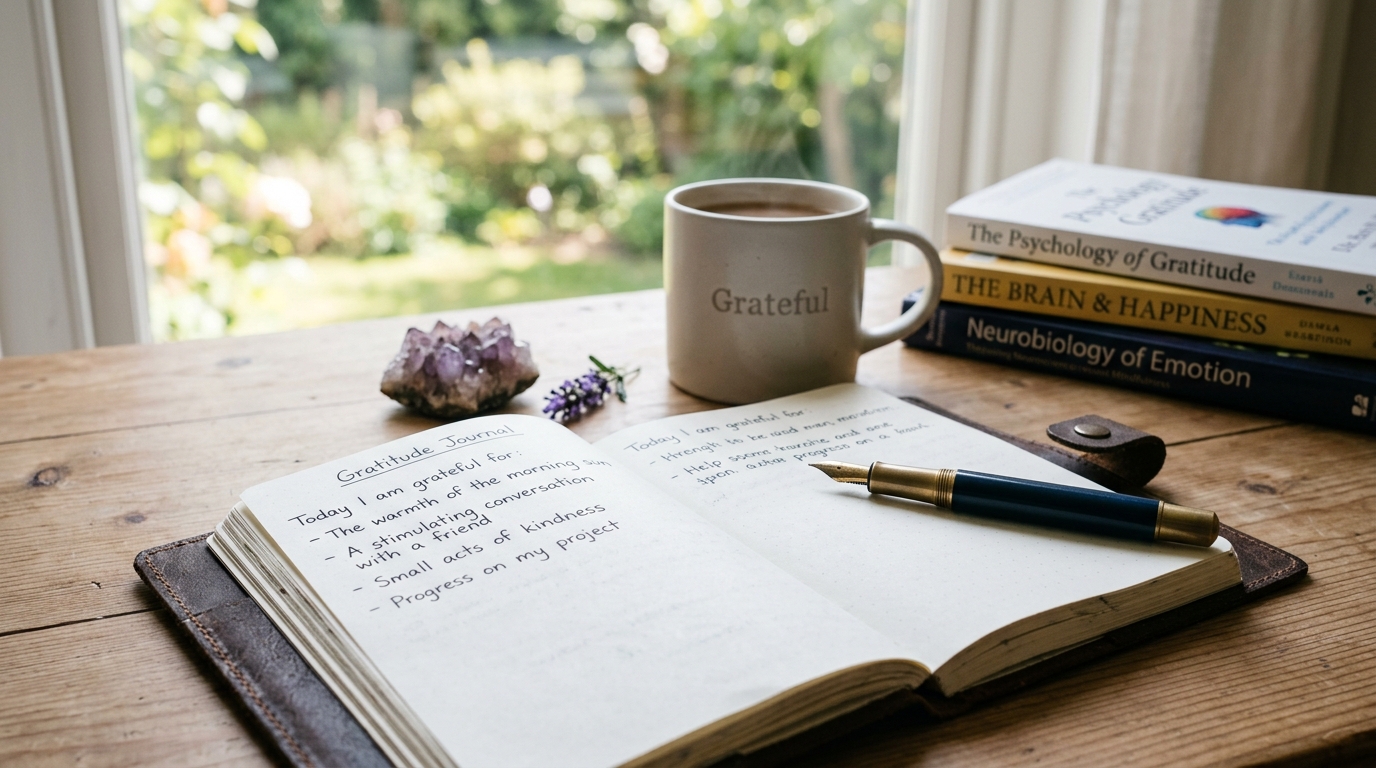
Gratitude isn't pollyannaish optimism. It's a focused attention practice that literally rewires your brain to notice positive experiences instead of dwelling on problems.
The Negativity Bias
Your brain evolved to notice threats. This "negativity bias" once kept you alive. In modern life, it makes you miserable—you notice problems, slights, and failures while overlooking good things.
Gratitude practice counteracts this bias by deliberately training attention toward positive experiences.
Brain Changes from Gratitude
People who practice gratitude show increased gray matter in brain regions associated with reward processing and positive emotion. The prefrontal cortex (rational thinking) becomes more engaged, reducing amygdala (threat response) reactivity.
These changes appear within weeks of consistent practice.
Gratitude vs. Toxic Positivity
Genuine gratitude acknowledges reality (I'm struggling and also grateful for X). Toxic positivity denies difficulty ("Everything happens for a reason; be grateful"). The former is psychologically healthy; the latter is dismissive and harmful.
Practical Gratitude Approaches
Gratitude journaling: Write 3-5 things you're grateful for daily. Specificity matters—"My morning coffee because it tastes good and provides focus" is more powerful than "I'm grateful for coffee."
Gratitude meditation: During meditation, bring to mind someone you appreciate or something you're grateful for. Sit with the feeling of appreciation.
Sharing appreciation: Tell someone specifically what you appreciate about them. "I appreciate your kindness and how you listen without judgment."
Savoring: Deliberately attend fully to positive experiences. Taste your meal. Notice the quality of light. Feel the warmth of sun. This isn't mindless enjoyment—it's attentive appreciation.
The Specificity Factor
General gratitude ("I'm grateful for my life") produces modest benefits. Specific gratitude ("I'm grateful for my friend's text today when I was struggling") produces stronger effects.
The specificity engages your brain more deeply.
Gratitude During Difficulty
Gratitude isn't about denying problems. During challenge, you can simultaneously acknowledge difficulty and notice what's working: "This situation is painful and I'm grateful for my support system."
This balanced perspective maintains hope and agency during hardship.
The Adaptation Effect
We adapt to positive circumstances. A new car is thrilling until it becomes normal. Gratitude practice resets this adaptation—it keeps you noticing and appreciating despite habituation.
Timeline
Day 1: Slight mood lift from deliberate focus on positives. Week 1: Noticeable mood improvement, increased optimism. Weeks 2-3: Reduced anxiety, greater resilience to setbacks. Months 1+: Habitual tendency to notice good things even without deliberate practice.
Morning vs. Evening
Morning gratitude sets positive tone for the day. Evening gratitude reviews the day through positive lens, improving sleep. Both are valuable—combining them produces strongest effects.
The Compounding Effect
Gratitude combines powerfully with social connection (sharing appreciation strengthens relationships), exercise (feeling grateful for your body's capability), and sleep (gratitude improves sleep quality).
These practices amplify each other's benefits.